"An idea that is not dangerous is unworthy of being called an idea at all."
– Oscar Wilde
Hello there fellow knitter!
This is The Yarnist. The daily newsletter that makes you love knitting the same way Fox and Hound love being best friends.
Disclaimer: This newsletter may contain sponsored ads and affiliate links.
When you buy using them, you support our work here at The Yarnist, as we get a small commission.
Knitspiration
⛓ The Clever Construction of Chainette Yarn
Most yarns are made by spinning fibers into strands and twisting those strands together.
That twist gives the yarn strength and structure.
But sometimes traditional plied yarn has a problem.
It can get heavy.
No one wants to spend weeks knitting a sweater only to end up with something that feels like a weighted blanket with sleeves.
Especially when you're knitting for warmer weather.
Not only that but certain fibers don't like to be spun the same way wool does.
Luckily there's a way to construct yarn that solves all these issues and more in a very clever way...
A Little Yarn History
For most of knitting history, yarn was made in a fairly straightforward way: fibers were spun into single strands, and those singles could be twisted together to create plied yarn.
That twist helped make the yarn stronger, rounder, and more balanced.
The number of plies often determined the yarn's weight (or at least it used to).
3-ply was a dk weight yarn. 4-ply was a worsted yarn.
Nowadays you can get 8-ply yarn that's aran weight and bulky yarn that has only one ply.
And while those plied yarns have their advantages, the industry needed a way to create light weight yarns with lots of volume.
On top of that fibers like linen, silk, and bamboo did not spin well using traditional methods.
So rather than wrap the yarn strands around each other a new type of yarn construction was invented.
What is Chainette Yarn?
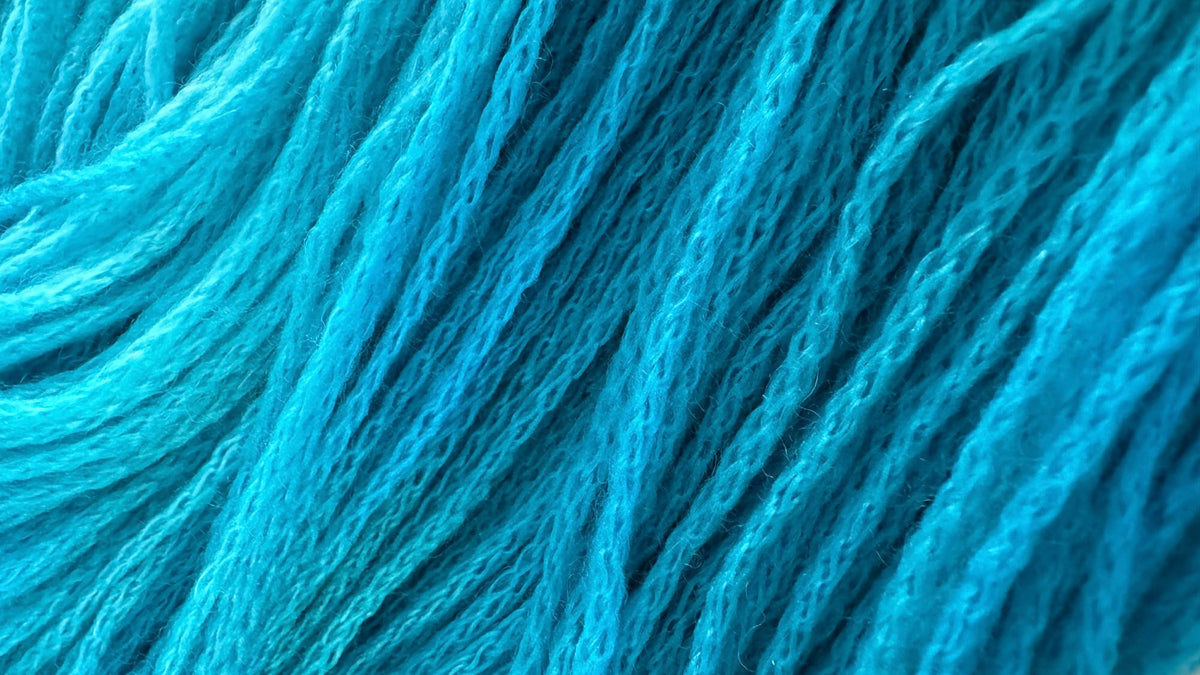
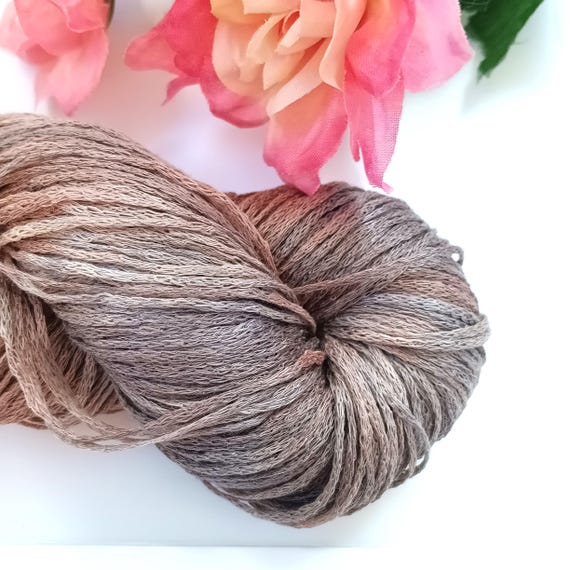
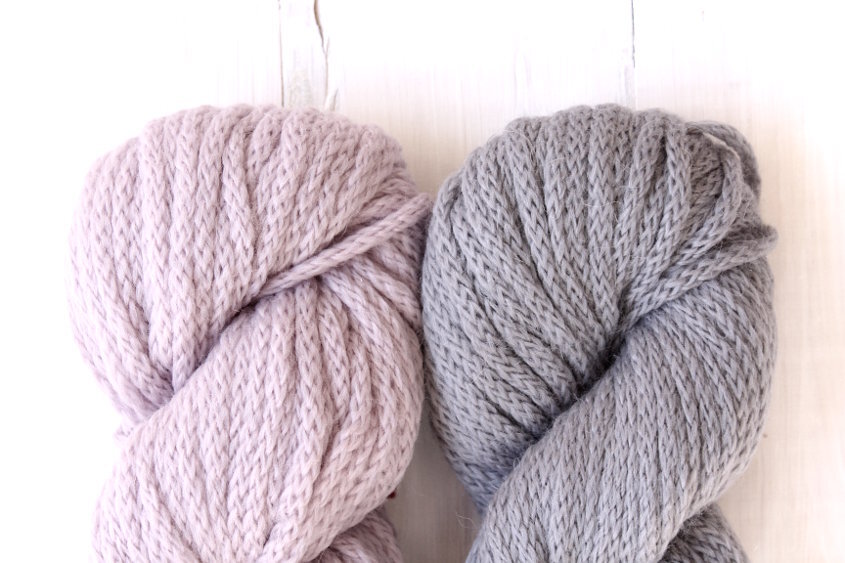
Chainette yarn is made by forming fine strands into a chain-like (or sometimes tube-like) structure.
Instead of taking several plies and twisting them together, the yarn is constructed more like a tiny knitted cord or crochet chain.
That structure creates little pockets of air inside the yarn.
And that air is the whole point.
It helps the yarn feel larger, softer, and lighter than a dense, traditionally plied yarn of the same thickness.
These kinds of yarns have been around for a long time, but only more recently have we've seen them show up in the hand knitting world.
NOTE: There is a different kind of yarn that uses a chain construction that is filled with another fiber, but we'll cover those another time.
What is Chainette Yarn Good For?
Chainette yarn is great when you want a project to feel cozy without becoming dense.
It’s especially useful for sweaters, cardigans, cowls, hats, scarves, and warm-weather garments made from plant fibers.
It can make alpaca feel lighter.
It can make cotton and linen feel softer and more flexible.
It can also make bulky yarns feel more balanced, giving them plenty of volume without all the extra weight.
Chainette yarns can also have lovely stitch definition.
That being said it's not all sunshine and roses.
Downsides of Chainette Yarn
No yarn is perfect (except maybe Malibrigo - kidding), and chainette is no exception.
Because the strand is already constructed into a chain, sharp needles can sometimes poke through the structure.
That can make the yarn snag easily and feel splitty.
And some chainette yarns don’t love being ripped back over and over.
They're more delicate.
Which is why I wouldn’t choose chainette yarn for socks, hard-wearing mittens, or projects that need a very firm fabric.
They're great for projects you want to feel light and airy, not protect you from the elements.
😍 Chainette Yarns We Love
There's a lot of yarns like this out there, and sometimes it can be hard to parse through them all.
So to save you some time, here’s a few of our favorite chainette yarns you might want to add to your stash:
Lindy Chain by Knit Picks (Get it Here)
Details - CYC #1 Fingering | 100g | 360 yds | 70% Linen, 30% Pima Cotton
A lightweight linen-cotton chainette that works beautifully for summer tops, tees, tanks, and light accessories. The linen gives it drape and stitch definition, while the chainette structure keeps it from feeling too stringy or dense.
Får by Woolfolk (Get it Here)
Details - Worsted Weight | 50g | 142 yds | 100% Ovis 21 Ultimate Merino Wool
A luxurious merino chainette with beautiful softness, warmth, and structure. Får is a great example of how chainette construction can make wool feel lofty and substantial without becoming heavy. It’s especially nice for sweaters, cardigans, blankets, and cold-weather accessories.
Vera by Berroco (Get it Here)
Details - CYC #3 DK | 100g | 279 yds | 80% Organic Cotton, 20% Viscose Aloe Vera
A smooth plant-fiber yarn with lovely drape and a soft hand. Vera is a good option for warm-weather garments, transitional layers, and knitters who want the breathability of cotton without the dense, heavy feel cotton yarns can sometimes have.
Sky by DROPS (Get it Here)
Details - DK Weight | 50g | 190m | 74% Baby Alpaca, 18% Polyamide, 8% Merino Wool
A soft alpaca-merino chainette with a complex tube-like structure that keeps the yarn lightweight, breathable, and warm. Sky is especially useful for sweaters, cardigans, hats, scarves, and other projects where you want alpaca softness without quite as much weight.
Cool Merino by Lana Grossa (Get it Here)
Details - Worsted Weight | 50g | 150m | 90% Merino Virgin Wool, 10% Polyamide
A light merino chainette that gives you warmth, bounce, and softness in a more airy construction. This is a nice choice when you want a classic wool project, but with a lighter feel than a traditional plied merino yarn.
Conclusion
So there you have it.
Chainette yarn is not magic.
But it is very clever.
If you’ve ever avoided bulky yarn because it felt too heavy, or avoided cotton because it felt too dense, chainette yarn might be worth a try.
But what do you think?
Have you used chainette yarn before?
Hit reply and tell us what you made.
We’d love to hear your experience. 😊
Daily Stitch

Austrian Long Tail Cast On
This variation of the long tail creates a slightly more stable edge.
The additional structure can help with curling fabric.
Deal of the Day
Cozy Essential Vacuum Storage Bags (20% Off)
Spring cleaning your yarn stash? These vacuum bags shrink bulky sweater quantities of wool down to flat, stackable slabs that actually fit in your closet. The triple-seal valve keeps air out so moths and dust can't reach your precious fibers. Perfect for seasonal yarns, finished projects, or hiding evidence of your last yarn haul.
Knits & Giggles
Thanks for reading!
Before you go...below you'll find a few ways we can work together, and other bits & bobs:
Here's some ways to take our relationship to the next level:
- ☕️ Buy us a coffee (Now accepting PayPal!)
Each of our emails is the culmination of many hours of research and lots of cups of coffee. If you want a simple way to show your appreciation you can buy us a coffee here.
- 🎓 Take a Yarnist Academy class
There are more than 50 classes to explore with topics like 2-Color Brioche, Mosaic colorwork, Entrelac. New classes are added every month! Explore our classes
Your Email Preferences:
You're receiving this email because you signed up for the Yarnist, a daily digital newsletter for Fearless Knitters.
If you don't remember doing that, you might have had a little too much wine that night...or it could be Gremlins. Can't stand those guys. Always causing mischief.
Your email address is Reader and your first name is Reader. To update your info click here.
Daily emails too much? Get our Sunday Weekly Update Only.
Still want out? No problem! Unsubscribe here.
Look at you reading all the way to the end!
Here's a bonus video with this incredible arial footage of sheep being herded. 🤯
Made with 💙🖤🤍 in Tallinn, Estonia
Narva Mnt 15, Tallinn, 10120