"Let us not pray to be sheltered from dangers but to be fearless when facing them."
– Rabindranath Tagore
Hello there fellow knitter!
This is The Yarnist. The daily newsletter that makes you love knitting the same way Chef Amaury Guichon loves giant croissants.
Disclaimer: This newsletter may contain sponsored ads and affiliate links.
When you buy using them, you support our work here at The Yarnist, as we get a small commission.
Knitspiration
↕️ Up or Down? Which Sweater Construction is Best?
There are many, many ways to knit a sweater, but there are two methods that are most common. These two construction methods are Top-Down and Bottom-Up.
Top-Down Sweaters are knit starting from the neck and working the sweater down toward the hem, usually in one piece.
Bottom-Up Sweaters are knit starting from the hem and knitting the sweater in pieces, working up to the neck.
There are advantages and disadvantages to each approach, with proponents on either side. Amy Herzog is a big fan of bottom-up sweater construction. While Karen Templar is a defender of top-down sweater construction.
But to figure out which sweater construction method is right for you we need to take a closer look at each.
To do that we'll take a look at the following THREE F's
- Fit
- Finishing
- Familiarity
FIT - The #1 Reason For Knitting Sweaters By Hand
When making a sweater our biggest goal is for it to fit well.
Have ever had a dress or pants tailored? If so, you understand the difference of having a garment customized to fit you.
It's nothing like one designed to fit as many people as possible.
In the fitted garment you look amazing.
The same goes for sweaters.
But too often we've only experienced store-bought sweaters that were not made to fit any one size or body type.
By making your sweater by hand, you have the ability to have a perfect fit. We'll talk more about exactly how to do this tomorrow.
For now lets look at how top-down sweaters and bottom-up sweaters deal with customized fit.
Top-Down Fit
Sweaters made from the top have one major advantage; you can try them on as you go. This means that you can make adjustments as you knit.
Need to make the sleeves taper more? No problem!
Want to change the shape of the body? Can do!
Decided to go with a longer hem? We have the technology!
The problem with top-down sweaters is adjusting the bust. It can be difficult (or impossible) to add to the chest without making the sleeves huge.
Bottom-Up Fit
Sweaters made from the bottom up have the advantage of being knit in pieces. This means the shape of the final product is like that of a sewn project. The pieces are knit to fit the body exactly how you want it to work.
The problem with bottom-up sweaters is you have to finish the project before you can see how it fits. That means a lot of planning up front, and paying careful attention while knitting.
Because once it's seamed up, it's hard to go back.
Verdict: Bottom-Up will provide a better fit, but you can't try it on until it's finished.
FINISHING - Putting It All Together (or Not)
Seaming seems (see what I did there?) to be a step that most crafters would rather avoid.
Yes, it takes time to seam things, but seaming also gives structure and longevity to a project.
Think about trying to pitch a tent without any tent poles.
You could hang it from something, and let it cover you like a canopy, but that's not the most effective shelter. Your tent may not last as long.
But, it is faster. And if your goal is to get under cover as soon as possible, it's definitely a viable option.
Top-Down Finishing
If you prefer your finishing to be minimal then top-down is the way to go.
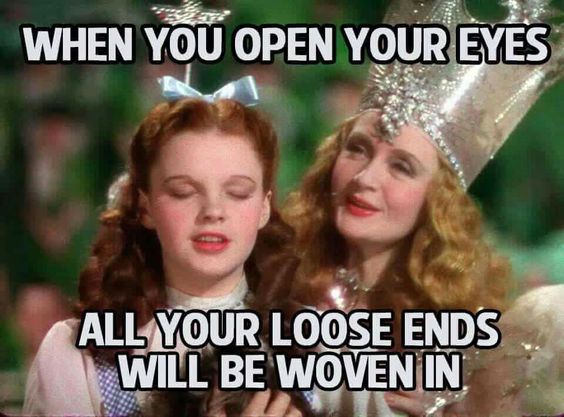
Most top-down sweaters are knit without seams, so there is no need to sew anything together. Unless you are adding a button band or special collar, all that is needed to finish your sweater is weave in the ends.
The disadvantage here is top-down sweaters lack structure. The weight of the sweater will rest on the collar. This can lead to the sweater becoming misshapen over time because of gravity.
There are ways to mitigate this, but it's not quite the same.
Bottom-Up Finishing
Bottom-up sweaters often need A LOT of seaming before they are finished. Since most bottom-up sweaters are knit in pieces, you must finish before knowing how it turned out.
But if everything goes well, you'll have a fitted sweater that will last a long time.
The biggest problem with a sweater that requires seaming is the pieces often never get sewn together...
Verdict: You are more likely to wear a Top-Down sweater because it is easier to finish. But bottom-up sweaters look amazing once you finish all the seaming.
FAMILIARITY - How Comfortable Are You With Your Craft
Ok, this was a little bit of an alliteration stretch, but I couldn't resist.
This is the biggest determining factor when choosing a sweater construction method.
If you're starting out, your ultimate goal should be to finish your sweater. That means you want the fewest hurdles in the way.
But if you're familiar with your craft, then getting technical to have the best fit shouldn't be a problem.
Top-Down: This is best for beginners or first time sweater makers.
- Try on your project as you go
- Make adjustments or fix mistakes along the way
- Minimal finishing required
Bottom-Up: This is the method for you if:
- You're confident in your ability to make fabric pieces that match
- The idea of seaming pieces together doesn't freak you out.
Now it's your turn
What sweater construction method would you choose and why?
Hit reply and let us know.
We'd love to hear your thoughts.
And if you want to learn a lot more about knitting sweaters (including both types of raglan sweater construction, register for our FREE Sweater Knitting Weekend!
Announcements
Starts Thursday! 3-DAY LIVE ONLINE EVENT | April 16-18th
Sweater Knitting Weekend: Raglan Edition
Join us for a weekend filled with knitting workshops, tips and tricks for mastering new sweater knitting techniques, and inspiration for your next sweater project.
Whether you’re a beginner or an experienced knitter, this event is perfect for anyone looking to explore Raglan sweaters with fellow Fearless Knitters.
|
Daily Stitch
Cartridge Belt Rib Stitch
This rib stitch is magic.
It's not possible to knit ribbing without using a purl stitch....right?
RIGHT?!
Oh but it is fellow knitter. It is.
Using a little slight of hand this stitch creates a unique rib pattern using only knit stitches.
Deal of the Day
Yarniss Bamboo Circular Needle Set (18% Off)
This interchangeable needle set gives you 9 sizes that snap onto 4 cable lengths, so you can knit socks, sweaters, or anything in between without owning 47 different needles.
The smooth stainless steel tips won't snag your yarn, and the color-coded cables actually stay untangled.
Everything fits in a zippered case so you can stop fishing for the right needle size in your couch cushions.
Knits & Giggles
Thanks for reading!
Before you go...below you'll find a few ways we can work together, and other bits & bobs:
Here's some ways to take our relationship to the next level:
- ☕️ Buy us a coffee (Now accepting PayPal!)
Each of our emails is the culmination of many hours of research and lots of cups of coffee. If you want a simple way to show your appreciation you can buy us a coffee here.
- 🥾 Get on the Sweater Camp Wait List
Our next session of Sweater Camp starts soon, but spots are extremely limited and will fill up fast. If you want to be the first to join, get on the wait list by clicking HERE.
- 🎓 Take a Yarnist Academy class
There are more than 50 classes to explore with topics like 2-Color Brioche, Mosaic colorwork, Entrelac. New classes are added every month! Explore our classes
Your Email Preferences:
You're receiving this email because you signed up for the Yarnist, a daily digital newsletter for Fearless Knitters.
If you don't remember doing that, you might have had a little too much wine that night...or it could be Gremlins. Can't stand those guys. Always causing mischief.
Your email address is Reader and your first name is Reader. To update your info click here.
Daily emails too much? Get our Sunday Weekly Update Only.
Still want out? No problem! Unsubscribe here.
Look at you reading all the way to the end!
Here's a bonus video with this incredible arial footage of sheep being herded. 🤯
Made with 💙🖤🤍 in Tallinn, Estonia
Narva Mnt 15, Tallinn, 10120